 Richard Gonzalez
Center Director, Research Center for Group Dynamics, Institute for Social Research
Co-Director, BioSocial Methods Collaborative
Amos N Tversky Collegiate Professor, Psychology and Statistics, LSA
Professor of Integrative Systems and Design, College of Engineering
| E-mail: | Email Richard Gonzalez |
| Address: | Research Center for Group Dynamics Institute for Social Research University of Michigan 426 Thompson Street Ann Arbor, Michigan 48106 |
| Phone: | 734-647-6785 |

About Me
I received my PhD in 1990 from Stanford University in Psychology. I worked with Phoebe Ellsworth studying psychology and law and with Amos Tversky studying mathematical modeling and judgment and decision making. I spent seven years at the University of Washington’s Psychology department, a sabbatical year at Princeton University, and have been at the University of Michigan’s Psychology department since 1997. More about me >>

Research
My research interests focus on judgment and decision making (JDM). Given that so many topics in psychology are related to JDM it makes it look as though I work on many different topics. Actually, I see a simple theme across all my research. I am interested in how people make judgments and what influences their decisions and choices. More about Research >>

People
I’ve been fortunate to work with amazing colleagues, coauthors, collaborators, and students throughout my career. Read about People >>

Teaching
- Theories of Social Psychology
- General Linear Modeling Course
- Multivariate Statistics
- Generalized Linear Modeling Course
- Structural Equations Modeling Course
- Statistics Animation Page
- Design Science PhD Program
Recent Posts
Can experienced designers learn new tools?
Generating novel ideas is a challenging part of engineering design, especially when the design task has been undertaken for an extended period of time. How can experienced designers develop new ideas for familiar problems? A tool called Design Heuristics provides strategies that support engineers in considering more…
Social interaction with a new sibling
Individual differences in longitudinal trajectories of children’s social behaviors toward their infant sibling were examined simultaneously across multiple social dimensions: Positive engagement (moving toward), antagonism (moving against), and avoidance (moving away). Three distinct social patterns were…
When emotions are both positive and negative
We propose a new measure for assessing mixed emotions over daily activities in older adults. The Activity Affective Complexity score is demonstrated in a subsample of older adults from the Health and Retirement Survey.
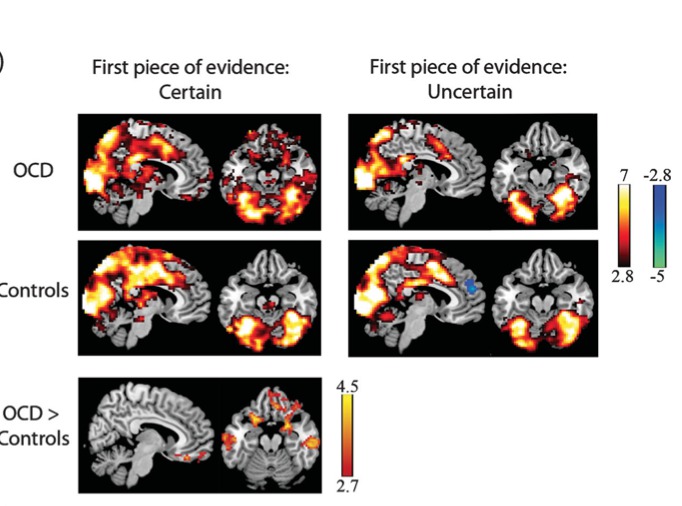
Brain differences in how obsessive-compulsive patients process uncertainty compared to controls
Obsessive-compulsive disorder (OCD) is associated with pathological uncertainty regarding whether an action has been performed correctly or whether a bad outcome will occur, leading to compulsive ‘‘evidence gathering’’ behaviors aimed at reducing uncertainty. The current study used…