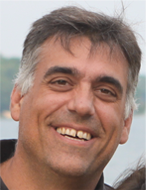
 Richard Gonzalez
Center Director, Research Center for Group Dynamics, Institute for Social Research
Co-Director, BioSocial Methods Collaborative
Amos N Tversky Collegiate Professor, Psychology and Statistics, LSA
Professor of Integrative Systems and Design, College of Engineering
| E-mail: | Email Richard Gonzalez |
| Address: | Research Center for Group Dynamics Institute for Social Research University of Michigan 426 Thompson Street Ann Arbor, Michigan 48106 |
| Phone: | 734-647-6785 |

About Me
I received my PhD in 1990 from Stanford University in Psychology. I worked with Phoebe Ellsworth studying psychology and law and with Amos Tversky studying mathematical modeling and judgment and decision making. I spent seven years at the University of Washington’s Psychology department, a sabbatical year at Princeton University, and have been at the University of Michigan’s Psychology department since 1997. More about me >>

Research
My research interests focus on judgment and decision making (JDM). Given that so many topics in psychology are related to JDM it makes it look as though I work on many different topics. Actually, I see a simple theme across all my research. I am interested in how people make judgments and what influences their decisions and choices. More about Research >>

People
I’ve been fortunate to work with amazing colleagues, coauthors, collaborators, and students throughout my career. Read about People >>

Teaching
- Theories of Social Psychology
- General Linear Modeling Course
- Multivariate Statistics
- Generalized Linear Modeling Course
- Structural Equations Modeling Course
- Statistics Animation Page
- Design Science PhD Program
Recent Posts
Decision making in older consumers
Here is a position statement that resulted after a 3 day workshop where 11 researchers discussed topics related to decision making in older consumers.
Research methods chapter for social psychology
This chapter discusses various issues that emerge when one undertakes research in social psychology. We walk the reader through topics such as generating research ideas, report writing, and everything in between. It was a fun chapter to write.
Review chapter on heuristics and biases in judgment
This chapter reviews the heuristics and biases approach to judgment under uncertainty. We also present our own view about the overall contribution of the research program. We sketch a framework that organizes past research and suggests new directions.
Testing research questions in dyads and groups
This chapter goes beyond the usual statistical introduction to dyadic data analysis by addressing some example research questions in shared norms and social influence.